Generative Engine Optimization (GEO): The New SEO for Creators in 2026
Is AI search killing your blog traffic? Learn what Generative Engine Optimization (GEO) is and how you can adapt your content strategy so AI engines like ChatGPT and Perplexity cite you.
This guide was refreshed on March 31, 2026 to keep the advice aligned with the current creator-platform, SEO, and monetization landscape.
- Added a pre-publish GEO checklist to make the advice easier to operationalize.
- Expanded the brand and entity SEO section so the article is less abstract and more actionable.
- Clarified how creators should connect AI visibility back to owned audience and monetization systems.
TL;DR
- GEO is about making your content easy for AI systems to extract, trust, and cite, not just easy for Google to rank.
- The strongest GEO pages combine clear structure, original insight, and explicit schema so answer engines can quote them with confidence.
- Topic authority and repeated brand mentions help LLMs connect your name to a niche, which improves recommendation likelihood over time.
- AI citations only matter if they land on an owned destination that can convert attention into subscribers, customers, or repeat readers.
Best for
- Creators who rely on organic discovery and want to adapt before AI answer engines erode more click-through volume.
- Newsletter writers, educators, and indie founders turning educational content into a long-term acquisition channel.
- Operators rebuilding SEO workflows around topic clusters, answer blocks, and owned audience capture.

For over two decades, the formula for discovering content has been static: people search on Google, and Google provides ten blue links. Creators adapted by mastering Search Engine Optimization (SEO)—stuffing keywords, hunting for backlinks, and optimizing page load speeds.
But in 2026, the game has fundamentally changed. The rise of AI-driven conversational engines like ChatGPT, Perplexity, Gemini, and Google’s own AI Overviews has transformed how people find information. Instead of clicking links, they are getting direct, synthesized answers.
This paradigm shift requires a new approach for creators. Welcome to the era of Generative Engine Optimization (GEO).
What is Generative Engine Optimization (GEO)?
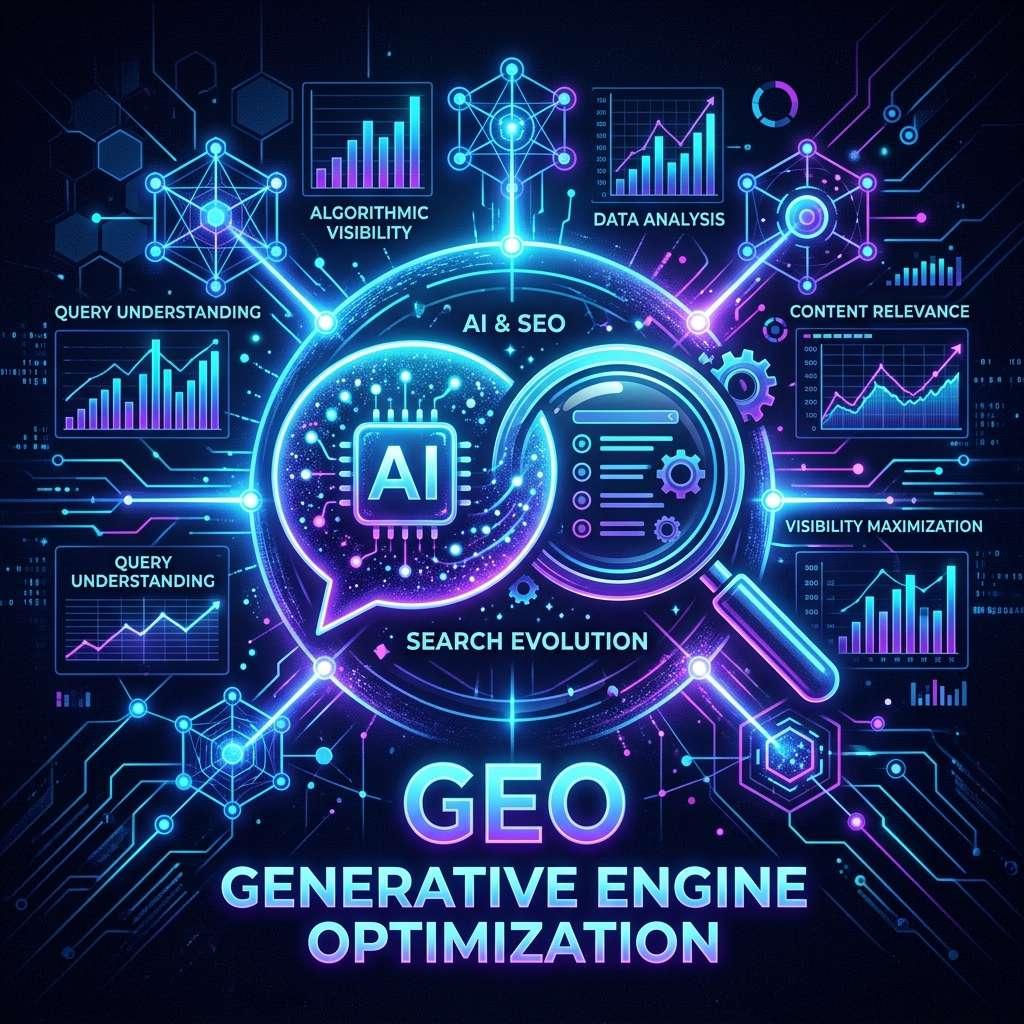
Generative Engine Optimization is the practice of structuring and creating content so that it is easily understood, ingested, and cited by Large Language Models (LLMs) and conversational search engines.
Unlike traditional SEO, which optimizes for an algorithm that ranks links, GEO optimizes for an AI that summarizes information. When a user asks an AI engine a question, you don't just want your link to appear somewhere on page two; you want the AI to synthesize your unique insights and include your website as a prominent source citation.
Why GEO Matters More Than Ever
- The "Zero-Click" Reality is Accelerating: With LLMs answering questions directly in the chat interface, the traditional click-through rate (CTR) to websites is shrinking for simple, informational queries.
- Citations Are the New Backlinks: In the AI search era, a citation in an AI's response is the holy grail. It guarantees visibility exactly when the user's intent is highest.
- Quality Over Keywords: AI engines are semantic. They understand context, nuance, and true expertise far better than legacy, keyword-matching algorithms.
How to Optimize Your Content for AI Engines (GEO Strategy)
If you are a creator relying on organic traffic to build your audience, how do you adapt? Here is the playbook for mastering GEO.
1. Structure Your Content for "Extractability"
LLMs love well-structured, easy-to-parse data. If your content is a wall of unbroken text, an AI will struggle to extract the specific facts it needs to formulate an answer.
- Use Clear, Descriptive Headings: Ensure your H2s and H3s are actual questions or definitive statements.
- Embrace Lists and Tables: AIs excel at scraping structured formats. If you are comparing platforms, use a Markdown table. If you are outlining a process, use a numbered list.
- Provide a "TL;DR" or Executive Summary: Place a concise summary at the top of your long-form posts. LLMs often prioritize content that is already neatly summarized.
2. Focus on "Information Gain" and Originality
AI models are trained on the entire public internet. If your article merely repeats what 50 other articles already say, the AI has no reason to cite you over Wikipedia.
This concept is known as Information Gain. What unique data point, personal anecdote, or proprietary insight are you adding to the corpus of human knowledge?
- Share Original Data and Case Studies: If you run experiments, publish the raw data and your findings.
- Inject Strong Personal Perspectives: AI struggles to replicate lived experience. Your distinct voice and subjective critiques are your moat.
3. Implement Robust Technical Semantic Markup (JSON-LD)
While AI is smart, you shouldn't rely on it guessing what your page is about. Help it out by providing explicit "meta-data" about your content.
This means using Schema Markup (JSON-LD). Tagging your content as an Article, providing explicit FAQPage schema for question-and-answer sections, and clearly defining the Author gives LLMs the structured context they crave. (Note: We recently updated Postion's platform to automatically inject Article schema into all creator posts to ensure maximal GEO compatibility!)
4. Optimize for "Brand Mentions" and Entity SEO
LLMs operate on "entities" (people, places, concepts, brands). You want your brand to become strongly associated with your niche.
If someone asks Perplexity, "What is the best platform for indie newsletter creators?", you want the AI to instantly associate that query with "Postion." This happens when your brand is frequently mentioned in context with those topics across the web, even if there isn't a direct hyperlink.
A Practical GEO Checklist Before You Publish
Before you hit publish, run your article through this short GEO filter:
- Can an LLM quote the page in one pass? Add concise answer blocks, summary paragraphs, and descriptive section headers.
- Does the article contain information gain? Include original observations, concrete numbers, examples, or lived experience that generic roundups will not have.
- Is the structure machine-friendly? Use lists, tables, FAQs, and semantic markup so crawlers do not need to infer your intent.
- Is the author credible on the topic? Make expertise visible through author attribution, supporting references, and tight scope.
- Does the page lead somewhere owned? A GEO win should route readers into your newsletter, product, or knowledge hub, not into another rented feed.
The Creator's Advantage in the AI Era
The pivot to GEO might seem daunting, but it actually favors independent creators over massive content mills.
Content farms that rely on churning out low-quality, keyword-stuffed articles are the ones being decimated by AI overviews. Conversely, creators who build authentic, deeply researched, and highly original content are precisely what LLM developers want their models to cite.
Building Your Immutable Home
In a volatile search landscape, relying entirely on borrowed traffic is risky. Whether traffic comes from Google Search or ChatGPT citations, your ultimate goal remains the same: capture that audience.
This is why having a centralized, owned hub is critical. When an AI search engine routes a user to your site, you need the infrastructure to convert them into a subscriber or a paying customer immediately.
Platforms like Postion are built for this exact reality. By offering integrated newsletters, digital product sales, and SEO-optimized structures out of the box, you can focus on writing the high-signal content that AIs love, while we handle the mechanics of building your creator business.
The future of search doesn't involve hunting for links; it involves synthesizing answers. By embracing GEO, you ensure that your voice is the one the AI chooses to share.
FAQ
Q1: What is the difference between SEO and GEO? A1: SEO is primarily about ranking links in search results, while GEO is about making your content easy for AI systems to summarize, trust, and cite inside answer interfaces like ChatGPT, Perplexity, Gemini, and Google AI Overviews.
Q2: What makes a page more citable by AI systems? A2: Pages become more citable when they combine clear headings, concise answer blocks, lists or tables, explicit schema, and genuinely original information that adds something beyond commodity content.
Q3: Why does GEO still require an owned website? A3: Because citations are only valuable if they send readers into a place you control. An owned site lets you convert AI visibility into email subscribers, product sales, community membership, and long-term audience equity.
Topic Hub
Explore the SEO & GEO Hub
This article is part of a larger cluster. Use the hub page to move between the pillar guide and the supporting articles that reinforce the same topic.
Keep Exploring
Related Reads
More posts connected to this topic cluster and reading path.
We Analyzed 500 Viral Blog Post Titles. They All Share These 3 Things
What makes a headline irresistible? We analyzed 500 of the most-shared blog posts to decode the science of headline writing. The results will help you write more clickable titles and might surprise you.
What is On-Site AI Search? A New SEO Strategy for Creator Blogs
In an era of 'zero-click searches', learn how Postion's integrated AI search helps you capture intent on your site, boosting user engagement and keeping readers in your content ecosystem.
What is the Best Ecommerce Platform for SEO in 2026?
What's the best ecommerce platform for SEO? We compare Shopify, BigCommerce, and WooCommerce on their ecommerce SEO features, and reveal why a content-led strategy is the key to winning.