What Are Long-Tail Keywords? A Guide to Finding Low-Competition Phrases
Confused about keyword research? This simple guide for SEO beginners explains what long-tail keywords are, why they are crucial, and how to find them for free to increase your blog's organic traffic.

If you've just started a blog, you know that effective SEO for beginners can feel overwhelming. Trying to rank for a popular term like "marketing" is impossible. You're competing against huge companies.
So, how do new blogs get organic traffic? The secret lies in long-tail keywords.
What Are Long-Tail Keywords, Exactly?
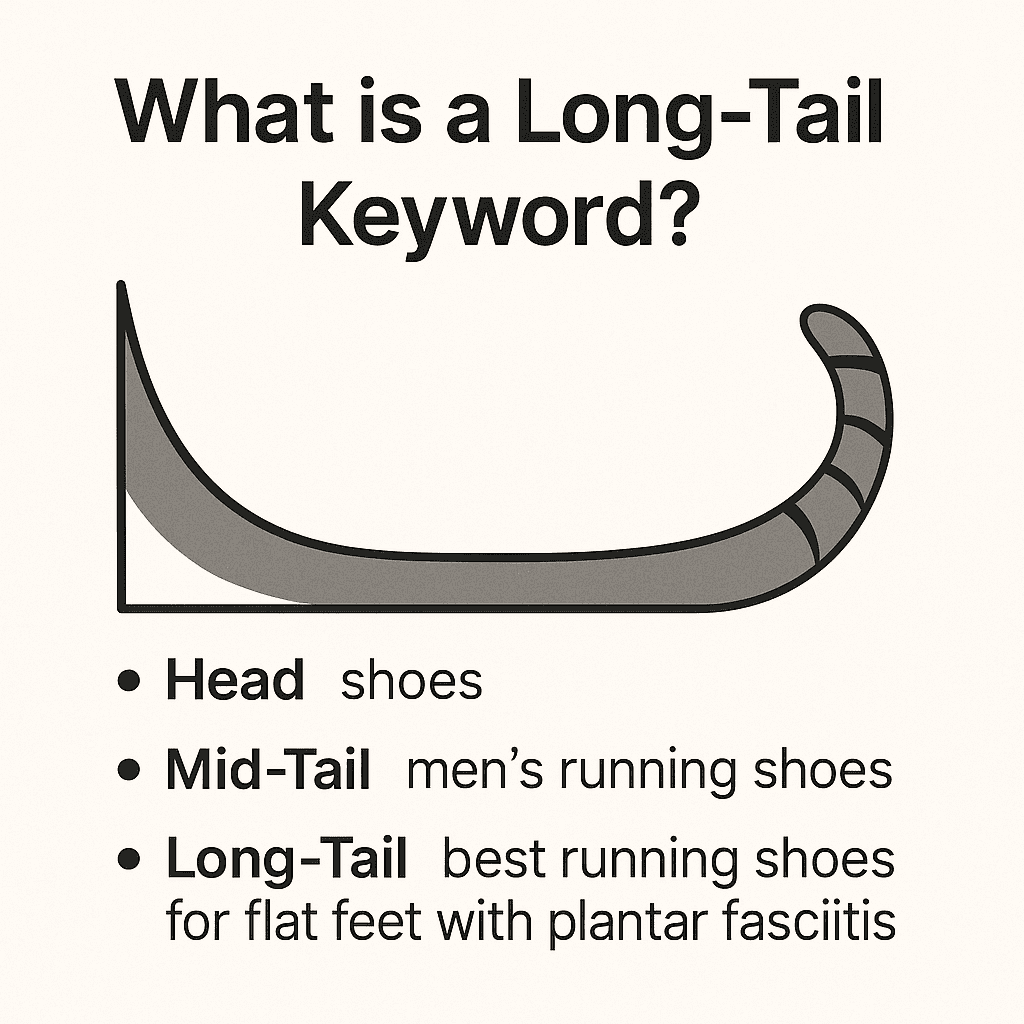
A long-tail keyword is a longer, more specific search phrase. It gets fewer searches than a broad term, but it's far less competitive and has a much higher conversion rate. Mastering them is the key to good keyword research.
- Head Term (Broad):
shoes(Impossible to rank for) - Mid-Tail Keyword:
men's running shoes(Very competitive) - Long-Tail Keyword:
best running shoes for flat feet with plantar fasciitis(This is a specific, high-intent, low-competition keyword you can rank for!)
People searching for long-tail keywords know exactly what they want. If you can provide the answer, you'll win their click and increase your blog traffic.
Why a Long-Tail Keyword Strategy is Your Best Friend
- Less Competition: You're not fighting with Nike or Wikipedia. You're competing with a handful of other niche blogs. This is why focusing on low-competition keywords is so effective.
- Higher Conversion Rate: Someone searching "how to fix a leaky faucet under the sink" is much more likely to buy a plumbing guide than someone just searching "plumbing".
- They Tell You What to Write: Each long-tail keyword is a blog post title waiting to be written. It's a direct line into your audience's brain.
How to Find Long-Tail Keywords for Free
You don't need expensive tools to start your keyword research for blogs.
-
Google Autocomplete: Go to Google and start typing a broad topic. See the suggestions that pop up. These are things people are actually searching for.
- Example: Type "how to start a newsletter" and see suggestions like "...for free," "...on Substack," "...and make money."
-
"People Also Ask" (PAA) Box: Search for your topic and look for the "People Also Ask" box. This is a goldmine of question-based long-tail keywords.
-
Reddit and Quora: Go to subreddits or Quora topics related to your niche. Look at the titles of the most popular posts. Those are the exact questions and problems your audience has.
Putting It All Together
Your entire content strategy should be built on a foundation of long-tail keywords. Each blog post you write should target one primary long-tail phrase.
Over time, as you publish more of these specific articles, Google will start to see you as an authority on the broader topic. That's how you build a sustainable engine to increase blog traffic.
Postion's platform is designed to help you win with SEO for beginners. From clean code to structured data, we handle the technical side so you can focus on creating great content. Learn more in our Indie Developer's SEO Playbook.
Topic Hub
Explore the Audience Growth Hub
This article is part of a larger cluster. Use the hub page to move between the pillar guide and the supporting articles that reinforce the same topic.
Keep Exploring
Related Reads
More posts connected to this topic cluster and reading path.
What Are Content Creator Platforms? A Beginner's Guide
What are content creator platforms and which creator tools should you use? We break down the 3 main types—Social, Monetization, and Owned—to help you build a smarter creator strategy in the creator economy.
What is Postion? The All-in-One Creator Platform (A Substack & Ghost Alternative)
Discover Postion, the ultimate Substack and Ghost alternative. An all-in-one creator platform with powerful SEO, low fees, and true ownership for creators who want to find the best creator platform to grow and monetize.
Why Your Newsletter Archives Are Invisible to Google (And How to Fix It)
Is your newsletter SEO strategy non-existent? Learn why most email platforms hurt your search rankings and how to turn your newsletter archives into a powerful SEO asset that drives organic traffic.